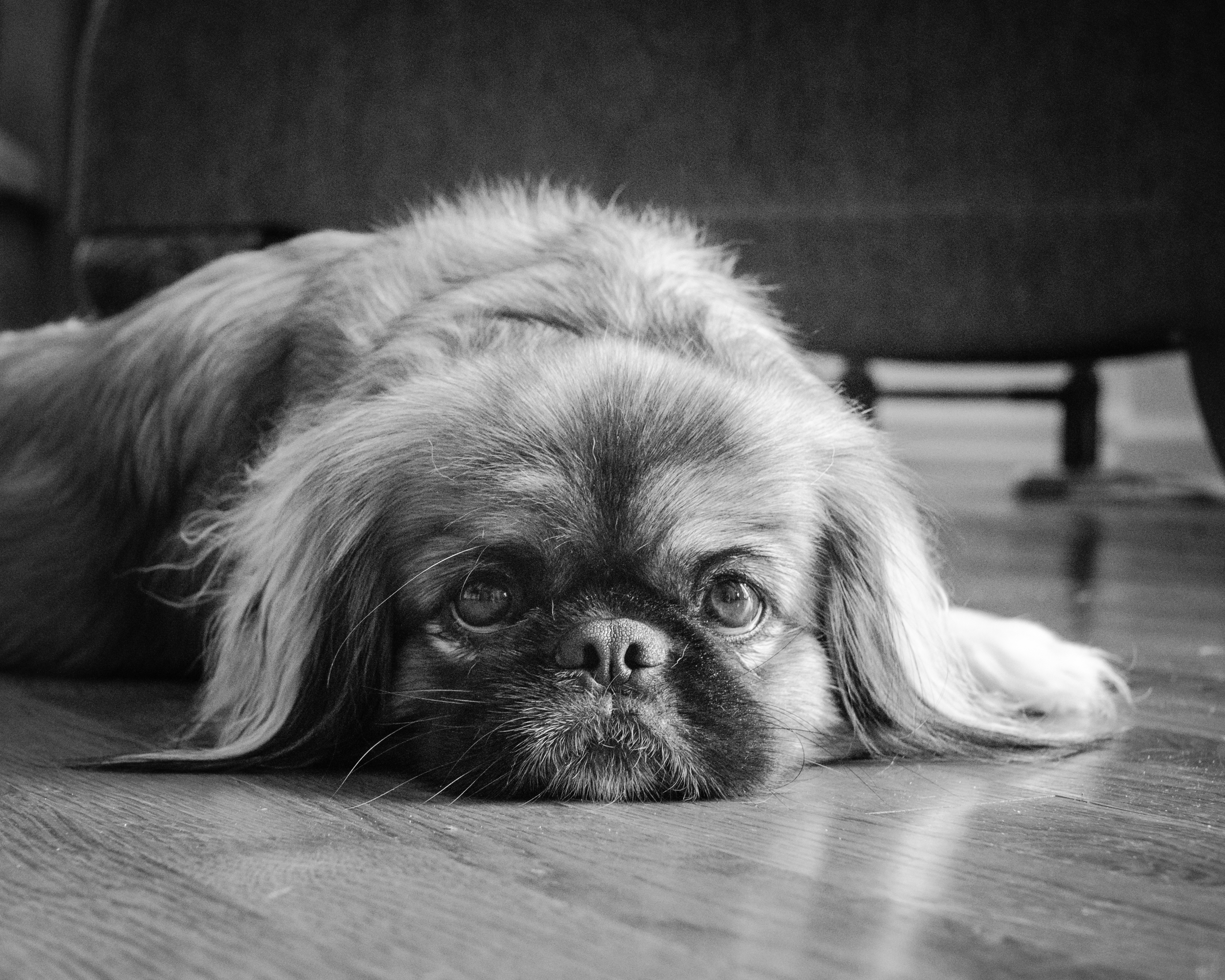
I documented our children’s lives growing up. And our family. And our pets. That’s the good thing.
I sat here, tonight, holding my camera more like a talisman, a comfort object, than the tool it is meant to be.
I’ve sold all except my vintage film cameras and adapted lenses that aren’t worth anything. I’m down to a single midrange body and three lenses, though I toy daily with selling two of the three lenses.
Today, I came really close to carting it all to KEH to sell the whole lot, minus the family pieces that I inherited.
I wish I’d never gotten into photography.
There. I said it here.
I’ve screamed it, sobbed it out loud, to Jared more times than I can count, especially in recent months.
Photography is the reason we have no savings. My obsession with it is largely responsible for the six figures of debt we find ourselves in.
And it’s gotten me nowhere. Even recently, in trying to volunteer to do a good thing: not good enough for whatever reason.
And if I could honestly say that my life was better because of photography, then maybe it’d be different. Except I can think of several that it’s markedly worse.
It’s not fun to be the free community photographer. Good enough for free, sometimes; not good enough to actually pay market value, though. I’m nice. At least I’m nice.
I have difficulty as I get older writing about anniversaries on the day they happen.
But, one of these weekends, Jared and I are going to go spend the night at the downtown Atlanta Ritz-Carlton, just so I can make new memories in a lovely hotel that has an unfortunate association with someone who should be a nobody. A ghost of the past; a stereotypical Generation Joneser, a cliche who clogs my memories.
I mostly want to go back just so I can have one of those yummy room-service double-stacked grilled cheese sandwiches again.
October 20, 2025 was a surreal day.
And, a year out, and a year minus ten days of zero contact, I have found a sense of relief and peace.
It all happened; I am writing about it in fits and starts. My DIY creative non-fiction reads are helping; I am still stumbling through Mary Karr’s The Art of Memoir.
And, it’s still pretty darn unbelievable to think, a year out, that the season of contact from August of 2022 to October of 2025 even happened, after a full twelve and a half years of silence prior to that.
A random discovery of a LinkedIn follow that triggered curiosity, and rubbernecking, and nightmares, and contempt, and in great strides, healing.
And stupidly, exposure to somebody else’s issues, re-traumatization for myself, and literal danger.
If you’d told me in July of 2022 how December of 2024 and October of 2025 would play out, there is no universe in which I would have believed you, nor would I have believed that I’d have actually written the note to him that ceased his willingness for contact: a gift from my 45-year-old self to that 19-year-old girl left delusional to sort out what happened in that less-than-fifteen-minute dorm room visit on his birthday.
And here we are, a year of more silence. A blessing. My life in general is better.
The audacity of those who think they are above all reproach still astounds me. It is extremely comforting to realize that his life is a gross caricature of anything worth living; karma is meting out accountability in ways that I couldn’t have asked for any better.
————————
My regular podcast rotations include Anderson Cooper’s All There Is, Jen Hatmaker’s For the Love, Emily P. Freeman’s The Next Right Thing, and Glennon Doyle’s We Can Do Hard Things.
These podcasts and their guests, over the last two years in particular, have really helped me dig out the grief and bring it to the table, in all the messiness.
And reading Anne Lamott and Mary Karr and Stephen King and Melissa Febos has brought a fire to my own history that I am only just beginning to sort out.
There is healing in bringing my story to words.
And as I reparent myself in my late 40s, I whisper through time to that 20-year-old girl who was schlepping back and forth between two different men at two different apartments, each of them considering me their own property and treating me as such, to tell her that she could, and would, do so very much better. That her particular better was more than she could fathom at the time. That no man has a right to do to her what that Joneser did to her. That it might be okay to just head home and tell them both goodbye; that she would do so eventually, anyway.
And it may be true that faced with his actual person last year, I was only able to bring my typical submissive silence–a trauma freeze response interrupting what I might have otherwise said that day.
But I did say my piece, and my truth met with his silence afterward told me that I hit the exact nail on the head with my words. It’s all I needed to know, even as I have been left to tend to my own wounds in the aftermath.
You can’t heal when your feet are still being held to the flames.
And you know, I can’t say I’d have the guts to go back and tell 2022-Caroline to repeat what would follow if I knew then what I know now, but I’m not sorry it happened, even at the particular costs involved.
Because I got my proof that I have the better life. I’m not sure I would have found the peace I have now any other way.
And, money literally cannot buy the peace of mind I’ve found. Or the voice I’ve gained in the process. Or the knowledge that I had the guts to face the predator-who-doesn’t-deserve-ghost-status-because-he’s-barely-a-man and walk away.
Worth it.
Another of those grilled cheese sandwiches at the Ritz really does sound good: soon.
Sometimes I come up with wild ideas. Jared would say this is another of those times. Not the craziest, but up there.
I’ve been on the rampage for optimizing my back situation, and next up was bedding. The following happened as a happy accident due to the storm from Hurricane Isaias, actually.
There’s nothing wrong with our actual king-sized bed for most people; the frame is a lovely gifted set my aunt and uncle gave us that matches the end tables and the dresser. My uncle painted it all to match and it is a lovely ivory. We have zero intention with parting with it.
And the mattress itself is an Ikea mattress we picked up in early 2022, that is one of the firmer spring mattresses Ikea sells, and it has plenty of life in it.
But, I am terrified of storms. Terrified isn’t the best word; it’s the nearest approximation. PTSD-level afraid is more accurate. When I was 10 years old a tornado destroyed a hefty portion of our neighborhood. A house less than 100 yards away from mine was picked up, foundation and all, and jumbled up into the middle of the road.
That kind of picture sticks with a person. I can still see that house sitting in the dawn light, in rubble in the middle of the road, today.
So, when the bad weather with Hurricane Isaias was predicted for Friday night, I was scared to go to sleep. We stayed up until nearly midnight Friday night, and then I set an alarm for 1:50 AM, so I could monitor the weather.
And, I woke up a few minutes before my alarm went off, and, not bothering the sleeping Oliver and Jared, made myself a pallet on the bathroom floor in our room, my go-to spot for storm sleeping these days when I am feeling skittish.
And, I was pretty startled at the comfort level. My hips felt great, as in I was unaware that there was any problem until I laid down on that bathroom floor on my pallet of blankets. I woke up several times, but only because the blankets shifted revealing the cold floor.
But I got to thinking about how good the “hurt” is when I lie down on the floor for my physical therapy exercises, and then I got to researching.
And as it turns out, maybe floor sleeping is not a bad idea in my particular case.
I’d had to trash my yoga mats recently because of cat urine (unfortunate things happened when our cats were unhappier in earlier times), so Jared and I made the trip to TJ Maxx yesterday and I found a PurEarth Harmony Natural Rubber Yoga Mat for $29.99. It’s extra long, too, which is perfect for having room for my pillow.
And last night, I set up this pallet at the foot of our bed for myself, laying out a quilt doubled up over the yoga mat, and a quilt to lie under.
And I did wake up several times in the night, but I discovered at 5 AM that was because I was still cold. Once I grabbed the comforter from our bed at 5 AM, I slept soundly without waking until 8:30 AM.
I’ve discovered several things with this two-night experiment:
First, I can absolutely sleep on both my sides. In the bed, it is uncomfortable to sleep on my right side in any way. On the floor, it is actually more comfortable to lay on my right side than my left, though I can do both in my need to turn myself.
For a little while, I was able to lie there with my bean bag under my right side. Not all night, though.
And at 5 AM, I could feel a difference— a slight twinge of pain, a good sort of pain not injury-like, in my sternum, like it had been stretched out the way it craved to be.
And, before bringing that comforter to the floor for myself at 5 AM this morning, I figured out that my hips absolutely need the unyielding support of a harder surface. We have a firm mattress, but it felt like a soft, unsupportive pillow— a hammock of sorts— to my fused hips in comparison to the yoga mat pallet I made for myself. I had to move back to the floor after trying the bed.
And somewhere in the night, I could feel a good pain twinge in my lower back, a twinge of feeling I don’t normally have.
And laying on my right side on the flat floor, my left lower ribs absolutely are activated in a way that wakes them up. In a way that for once doesn’t feel fingernails-on-a-chalkboard-cringe like the hanging from the Swedish ladder in my bathroom does.
And, surprisingly, it is not hard even at 47 years old with a lifetime of just turning to get out of bed, to get myself off the floor when I need to get up.
And even more surprising: I felt more prepared to move around this morning than I usually do climbing out of the bed.
We’ve got long-term plans for making this a better long-term solution, too: Jared has long found that his tailbone hurts on our current mattress setup. He frequently has to go to another room or the recliner in the living room to sleep.
And, Porter’s room is large enough to accommodate our king-sized bed.
So, a switch may happen between Porter’s bed and our bed. If we re-orient the bed direction in the room to another wall and make the bed switches, there will be just enough room for me to set up my nightly pallet on the far side of the bed and not obstruct a walkway.
The good thing about never getting rid of anything, and being raised with a “musical furniture” sort of mindset in which furniture is just moved around even between households instead of gotten rid of and replaced, is that moving this stuff around is no biggie, and comes naturally.
And I don’t even have to worry about a miniature nightstand for my new setup, because my Rough Cut Designs mini stool is perfect for just this purpose.
And so…a hurricane may have helped my back long-term. We shall see.
None of it is glamorous. The pain is always there. I suppose it always was; I just had to get to be about 47 years old to become aware of it. Thirty-three years post-fusion of two-thirds of my back and I suppose it’s normal that my hips hurt all the time. They do have Harrington rods drilled deep into them.
I still use the stationary bike I bought in 2020 at the beginning of the pandemic, when I could no longer go to the rec center to get on the elliptical.
It takes active effort to hold my right shoulder back at all times, all waking hours of the day.
But, my small, little, limited workouts these days revolve around these tools.
The block is for balance exercises; I stand on one foot on it for leg extensions.
The bean bag and I are new friends but we are quickly developing a hate/hate relationship; its twin lives in the bedroom, for sleep.
There’s nothing special about the ball; it’s a kid’s bouncy ball I bought at Ingles.
And the two-pound weights are simple, but a repetitive part of the day.
The beanbag came from happysew.com. I had no idea before about 4 months ago that there were whole companies that specialize in scoliosis physical therapy devices. This is one of them.
It is not a happy thing. I’ve described my back situation before, but my thoracic curve is also twisting my ribcage such that my ribs both twist and a hump to the right.
My physical therapist wanted me to lie on my right side with this bag under horizontal under the apex of the curve of the hump.
I adapted it so that the bag lies under the worst part of that side as I lie on my back, because the hump also is beginning to protrude under my shoulder blades.
And she didn’t tell me to do this, but I adapted the floor flies she taught me a good while ago to lying on the bean bag while I do them…I do about 50 reps like that. And while I do the reps and lie this way, my knees are bent with the ball between them. And while I lie this way, doing the reps, I do the Schroth breathing exercises my physical therapist taught me…breathing in on the down, breathing out very slowly, as controlled as possible, visualizing inflating my left side, on the up.
And, it’s always a painful-ah-yes-I-had-no-idea-my-body-was-ill-contorted when I first lie down in that position. My right shoulder blade protests, my whole left side burns as it hasn’t realized it was collapsing, under the force of the internal stretch.
As I get further into the floor flies, it becomes easier to manipulate my left shoulder blade to make it protrude, so that my arms are more in the alignment they should be.
And, the longer I do these exercises, the more aware I become that my body is severely contorted inside, in ways I am helpless to correct at all.
Tonight I did the bridge pose reps my therapist likes me to do, with the bean bag under my right shoulder. That was a new kind of….I don’t know what.
My body is contorted in ways that may be invisible to people who see me in public; I don’t know.
It’s such an integral part of who I am that I can hardly imagine how it’s not written all over how I move, even.
And my hips hurt. And my right shoulder hurts sometimes. And my left side screams in protest when I attempt to stretch it out.
And I don’t use my Swedish ladder bars in the bathroom for the other part of the exercises as much as I should. Because I also sometimes sit on my legs, on the floor, in front of the ladder, and hang with my left hand about six rungs up, and my right hand about five rungs up, and hang with my whole weight resting on my hands, and also do those breathing exercises to try to inflate my left side. And as I do it, I can frequently feel the twist of my left ribcage.
It’s sort of a feeling akin to fingernails scratching on a chalkboard.
And I have a stool I keep beside the Swedish ladder bars, and there is a resistance band tied to it, and sometimes I do the one that is the hardest of all…about five breath’s worth…where I sit with my right side to the bars, and hold onto the bar at arm level, and lift my left arm above me, holding the resistance band, and, pulling the resistance band down, I breathe out the Schroth breathing at the same time. About five of these reps is about all I can do.
But, when I stand up from the floor fly exercises with the bean bag, or when I stand up from the hanging from the bars, miraculously…my shoulders are somewhat even.
And, when I’m feeling super-compliant with my physical therapy, I attempt to sleep on my right side with the beanbag horizontal under me in the bed. That one is difficult because, as the curve progresses, it becomes more difficult to sleep on my right side.
And, sometimes…just sometimes….when I lie on that right side with the beanbag under me just long enough…sometimes I can more easily feel the bottom left of my ribcage, a part of my body that seems to have thoroughly checked out of the human feeling experience whatsoever.
And when I just can’t lie on my right side anymore, I move to my back and attempt to sleep in the same position in the bed that I sleep with the beanbag under me for the floor flies, with it under my shoulder blade and right rib cage. It’s not as easy to sleep like that as one would think.
And, when I’m depressed, it all falls by the wayside, and I sleep on my left side, the weight of the world falling on my left ribcage that is willing itself to painlessly collapse.
At any rate, my entire internal scaffolding structure feels like it has been tested to limits tonight. And I am twisted, and there is no untwisting, and the best I can do is maintain and know the difference between hurt pain and normal pain, because the normal pain is just a baseline living now.
And truthfully, I don’t think about it most of the time.
I ended up unplanned at the Buckhead Goodwill on Roswell Road yesterday, where I scored some mispriced, I found out from the cashier, Mavi Jeans brand jeans in great shape for $3.54– $3.85 including tax. I got home and they fit me perfectly. I hadn’t counted on them fitting, but I was grateful at that point the universe sent a win. I’d needed some new jeans but it wasn’t in the trying-not-to-spend-on-credit budget.
It’s hard to find four dollar jeans even at thrift stores these days.
And so, in discussing the day last night, Jared said that in the future, whenever I need a mental health code word, all I have to say to Jared is, “four dollar jeans,” and he’ll know exactly what is going on. Because it does happen that sometimes lengthy explanations of what I need are not appropriate.
I’m not sure why it took us 21 years of marriage to figure out a code word system might be called for in some situations.
Four dollar jeans. My new favorite pair of jeans are the perfect symbol for a mental health code word in our marriage.
Hi there– I write daily about midlife, parenting, photography, long marriage, mental health, and everyday adventures.
Two-thirds of my kiddos are off at college, and I am figuring out life by processing out loud.